


Captain Ahab didn’t hate the white whale just because it took his leg. No, he hated it because it refused to make sense. “That inscrutable thing is chiefly what I hate,” he tells the crew of the Pequod. That line outlives the whole book because it names something deeply human, our absolute rage when we bump into a mystery we can’t solve. To Ahab, everything you can see is just a pasteboard mask, and a man’s job is to punch right through it.
We always read Moby-Dick as a classic man versus nature story. But looking at it now, it feels more like a story about civilisation versus the unknown; only the unknown has stopped being external.
It’s not out there past the edge of the maps anymore. It’s right behind our skulls. The mind is the last wild frontier left on Earth. It has no coastline, no flag, and until recently, no machine could even touch it. And look at what’s happening in that space right now. In early clinical trials, people with quadriplegia are getting implants that let them steer a computer cursor just by thinking. By the company’s own accounts, a man with Amyotrophic Lateral Sclerosis (ALS) is finally talking again through a synthetic version of his own voice. These are some of the kindest things modern medicine has ever pulled off. If you’ve ever watched a family wait in agonising silence for a paralysed father to say even a single word, you aren’t going to sneer at that.
Yet, here’s the catch. With the same signal reading, AI-driven machinery can be flipped around. Instead of handing a person back their cognitive autonomy, it can measure it, evaluate it, and how far is that from ‘manipulating it’? Your attention, your shifting moods, your fatigue, your raw intentions, all tracked and made visible to some private corporation or government.
The very same tech that gives a voice back to the speechless can strip away privacy from the rest of us.
My point here is pretty simple. The brain is our very last private room. Throughout history, if someone in power wanted to control you, they could take your body, your house, your land, or dictate what you could say out loud. But they couldn’t breach the inner sanctuary of the human mind, that quiet space inside where you decide what you actually believe, and where you draw the line. Every privacy debate we’ve had up until now was about what other people are allowed to know about us. This one is different. This one asks if there will be anything left of us that stays out of reach.
Prometheus is basically the poster child for human progress. In Prometheus Bound, the ancient Greek play usually credited to Aeschylus, he doesn’t just steal fire from the gods. He teaches us how to write, do math, heal the sick, and build things. And for his trouble, he gets chained to a rock for eternity.
When Mary Shelley subtitled Frankenstein ‘The Modern Prometheus,’ the quick takeaway was that Victor’s big mistake was playing God and creating life. But if you actually pay attention to the plot, his real sin was panicking and running away from his own creation. The fire itself wasn’t the crime; ditching it was. Nobody in their right mind wants to give fire back to the gods. The real debate is over who gets to tend the fireplace.
Neurotech is just fire by another name, and it comes in four main levels.
At the hottest, most intense end, you’ve got surgical implants, tiny electrodes planted right inside the brain to catch signals from nearby neurons. Any setup that takes those signals and translates them into computer commands is called a brain computer interface, or BCI. Elon Musk’s Neuralink is the name everyone knows here. Their PRIME study, an early feasibility trial, is testing out a wireless chip and a specialised surgical robot in paralyzed adults, mainly folks living with spinal cord injuries or ALS. Their main goal right now? Let people move a computer cursor or type out words just using their minds. They’ve also kicked off a second trial, VOICE, aimed at helping people with severe speech impairments talk again.
The first volunteers in these trials aren’t taking this lightly, they weighed serious surgical risks against a deep, desperate need, and their consent is as real as it gets. But keep in mind, these studies are still experiments, not consumer devices. Plenty of university labs have pulled off similar speech decoding feats in research settings, so this medical breakthrough isn’t the property of any single company.
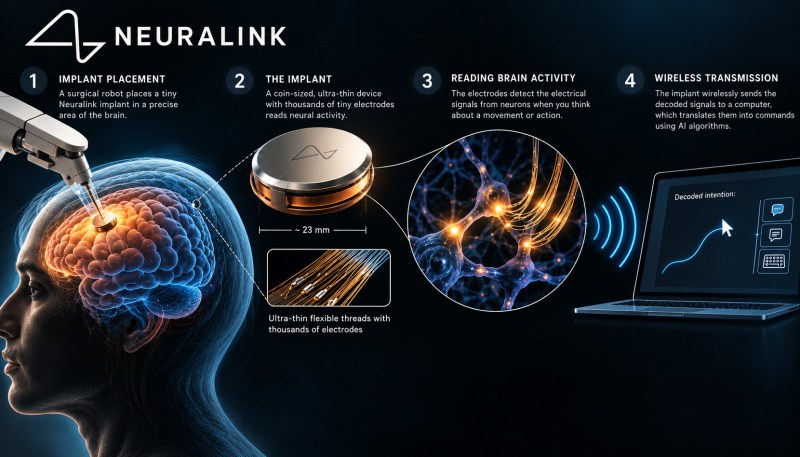
And make no mistake, this isn’t just an American thing. A study from 2024 logged 67 people worldwide who had received BCI implants up through 2023. Today, one researcher estimates that number is closer to 150. Synchron is trying out a device that gets snaked right through a blood vessel, while Precision Neuroscience uses a thin film laid gently on the surface of the brain. Then you’ve got China, where back in March 2026 regulators gave the green light to Neuracle’s NEO, a surface level implant that lets folks with spinal injuries control a robotic glove. They tested it on patients before doing their very first commercial implant a few months later, in July.
Underneath these high-stakes implants sits the exact same science operating in clinical settings. Beneath that? Consumer gear, like smart headbands and everyday sensors. And finally, sitting at the bottom, is the quietest tier of all, software that figures out your mental state just by listening to your voice, watching your typing rhythm, tracking facial tweaks, or looking at your sleep patterns. No helmet required.
Take India’s recent splash with Temple, a wearable started by Zomato co-founder Deepinder Goyal. It’s basically a small sticky sensor you slap onto the side of your forehead. Its creators call its core metric BrainFlow, which really just estimates blood flow in the head, and their own fine print clearly states it’s a fitness and wellness tool, not a medical device. Goyal himself noted it relies on the same light based optical sensors you find in everyday smartwatches, rather than reading raw brain waves.

So no, Temple isn’t reading your inner thoughts. But it still managed to scoop up $54 million in funding at a $190 million valuation, with plans to start shipping before 2026 winds down and this why it matters. The Temple isn’t a big deal because it’ll read your mind. It’s a big deal because it makes wearing a sensor on your forehead all day feel normal, like wearing a watch, even ‘stylish’. Call it cranial consent, that quiet moment when putting a gadget on your temple stops feeling weird and starts feeling ‘trendy’. Nobody forces you to do it, but a company gradually promotes their product.
People always say the body is a temple. But a real temple has a door, and the person inside decides when to open it.
Power has always expanded by claiming new territory. First it was land, then the ocean, followed by the sky, radio frequencies, and satellite orbits. Lately, it’s been our lifestyle choices and our daily attention spans. It’s the exact same playbook every single time: someone figures out how to measure something that used to be public or untouchable, and measuring it turns into owning it. Francis Bacon said knowledge is power. But turn that idea around, and it becomes much darker: if power can reach into your mind, it can reach into the deepest part of who you are.
What’s coming is neural colonialism. It doesn’t need to force implants on anyone. Instead, it operates far more quietly. People just hand over their cognitive data voluntarily, for a bit of convenience, a productivity boost, a piece of tech, safety, or just to be the part of a popular trend. There are no warships rolling up to your coast here. Just a simple checkbox on a screen.
The word doing the heavy lifting there is ‘voluntarily.’ Because when a choice is baked into a gadget you rely on, a job you can’t afford to lose, or an insurance policy you desperately need, it isn’t really free. There’s a price tag attached. Skip the headband, the latest wearable, and you might miss out on a discount, a workplace bonus, or the benefit of the doubt. Before you know it, even your refusal gets tracked as a red flag. Historical colonies weren’t just built on raw brute force, after all. They were built on trade deals that looked, at least on paper, like a fair bargain to the folks signing them.
And those fine print terms behind the checkbox? They’re worth a close look. Back in 2024, the Neurorights Foundation dug into the privacy policies of thirty consumer neurotech companies. Twenty-nine of them basically had wide open access to users’ neural data with almost no real guardrails. To make matters worse, over half stated point blank that they could pass that data along to third parties.
We’ve actually seen this movie before in history. Centuries ago, nations fenced off its shared pastures, put a price on the land, and gave it to private owners. People who had depended on that open land suddenly had only one thing left to sell, their labour. Something similar is happening now, only this time, what’s being fenced off is our attention and mental energy. It’s being measured, divided, and turned into engagement numbers, attention scores, and even cognitive risk profiles.
The old land grabs at least left physical hedges you could see and touch. These digital fences are completely invisible, which is precisely why it’s so easy for us to sign on the dotted line.
Sci-fi authors saw this coming way before the rest of us. Take Yevgeny Zamyatin’s 1920 novel ‘We’, where citizens of the ‘One State’ live inside completely clear glass apartments and call it total transparency. George Orwell reviewed that book back in 1946, took notes, and handed us the telescreen, a device sitting in every room that you couldn’t ever turn off. Yes, you read it right. George Orwell’s novel 1984 was inspired by a Russian writer. But today, the real threat isn’t a forced screen on the wall. It’s a sensor stuck to your temple, something you bought willingly, rated five stars online, and cheered for at a flashy tech launch event.

The human mind used to be a fortress. Neurotech promises to turn it into a house of glass. And check out the double standard here. The person sitting inside the glass house is totally exposed, while the tech company’s internal algorithms, profits, and true motives stay hidden in the dark. But living in a glass house only matters if someone’s actually staring. So, what are these machines really looking at?
First off, let’s clear up what isn’t happening right now. No gadget on the market or in a clinic can read your full, word for word thoughts like you’re reading this sentence. Even the tech companies themselves admit their tools are much more limited. Neuralink says its chip basically decodes your intent to move. In their speech tests, a patient had to train the system first by silently miming words, only later practicing by just thinking them. Meanwhile, consumer wearables track physical signals like blood flow, heart rate, and sleep, things that can hint at stress, exhaustion, or focus. But let’s be real: a bodily hint isn’t a full blown confession.
That’s no reason to breathe a sigh of relief, though. Brain decoders are getting sharper, sensors are shrinking down, and the AI models behind them are training on bigger and bigger piles of data. What feels impossible today might just be next year’s headline feature, and the legal system is notoriously slow to catch up.
Pop culture caught onto this risk decades ago. In Michael Crichton’s 1972 book ‘The Terminal Man‘, doctors surgically wire a computer into a violent man’s brain to stop his seizures. But the brain adapts, gets hooked on the electrical hits, and the whole experiment goes off the rails. The truth here sits right between two lazy extremes, believing nothing is happening, and believing the sci-fi nightmare is already fully here. Just look at what’s going on in the lab. Every single human trial starts with animal testing, a pattern sci-fi saw coming, too. Remember ‘Flowers for Algernon‘? A lab mouse gets surgery to boost its intelligence before the main character gets the same procedure. The mouse starts deteriorating first, leaving the man to watch his own tragic future play out right in front of him.
All this while, real-world lab work hasn’t slowed down one bit. Just this year, macaque monkeys managed to steer an avatar through a virtual forest using nothing but brain signals from a chip. Over at University College London, researchers actually reconstructed 10-second video clips straight from the brain cells of mice, rebuilding what the animals had just watched. Cornell built a tiny wireless device that tracks brain activity in animals running around outdoors, capable of beaming light or electricity right back into their heads.
To top it off, this year’s Nobel Prize in Physiology or Medicine went to the pioneers of optogenetics, a technique that lets scientists flip individual brain cells on or off with light. Way back in a 2012 study, mice got a mild shock in one cage, and researchers tagged the exact cells that fired up in fear. A few days later, in a completely different cage, hitting those exact cells with light made the mice freeze dead in their tracks, as though they were experiencing the shock again.

Humans are right in the middle of this picture, too. Earlier this month, researchers at the Weizmann Institute unveiled a model that can reconstruct what a volunteer was looking at just by reading an fMRI scan. What used to take forty hours of calibration now takes about one. Granted, it still requires a willing participant lying dead still inside a massive scanner, and it makes mistakes, a picture of a cake got decoded as three sandwiches. But even the scientists behind it warned where this is heading, as tech shifts toward cheaper EEG caps, companies could start squeezing way more data out of a calibrated user, potentially without them ever giving clear consent.
The animals, meanwhile, pay the ultimate price for all this progress, and the historical track record isn’t pretty. Way back in 1962, researchers from the University of Oklahoma and the Oklahoma City Zoo shot up an elephant named Tusko with a massive dose of LSD, hoping to trigger musth (period of high testosterone and aggression), that violent frenzy bull elephants get. Tusko died, and the researchers basically wrote it off as a potentially useful experiment for controlling wild elephants in Africa. Fast forward to 2022, when Reuters reported that Neuralink had killed roughly 1,500 animals since 2018, including over 280 sheep, pigs, and monkeys, triggering a federal investigation. Neuralink fired back that testing new devices on animals is a necessary evil and that they’d passed all inspections, and Reuters conceded the sheer body count alone didn’t prove illegal activity. If our civilisation is going to question what can be done to a human mind, we’d better keep asking what’s being done to a monkey’s.
UNESCO is the UN branch that looks after education, science, and culture. Back in November 2025, its member nations agreed on a set of ethical guidelines for brain tech. It’s worth noting that these guidelines are just advice rather than permanent laws, meaning no country is legally obligated to stick to them.
So what are they actually proposing? At the heart of it, your mental privacy is a big deal; it’s bound up with your personal dignity and identity, so nobody should hold it against you if you decide to pass on to neurotech. On top of that, bosses shouldn’t use it to monitor or penalise employees, and schools shouldn’t rely on it to grade kids or evaluate teachers. You also shouldn’t have to surrender your brain data just to get access to a normal product or service. And surprisingly, these protections even extend to simple daily habits, like how you talk or tap on a keyboard, if someone tries to use those patterns to decode what’s going on inside your head.
The real danger here starts with inference, and UNESCO’s new Recommendations on the Ethics of Neurotechnology hits the nail right on the head. They don’t just focus on raw brainwaves. They cover eye-tracking, typing habits, voice patterns, how you walk, skin responses, heart rates, and facial expressions, because using any of those clues to guess your headspace brings up the exact same human rights questions. A system doesn’t need to read your literal thoughts word for word. It just needs to infer that you’re distracted, anxious, burnt out, lonely, lying, aroused, angry, or ready to give in.

An inference is really just a guess. And that guess cuts both ways. If the algorithm gets it right, your privacy is gone. If it gets it wrong, your reputation is ruined, because good luck arguing with a high confidence score on a computer screen. UNESCO even stepped in to tell governments to crack down on hype heavy claims around tools promising to fix your sleep, focus, memory, or mood.
This is what I call the probabilistic self, a world where you aren’t judged by what you’ve actually done, but by what some algorithm predicts you might feel, buy, mess up, or become down the line.
In Hamlet, the grieving prince tells his mother that he has “that within which passes show.” It’s probably the best definition of inner life ever written in the English language. Neurotech’s quiet, ultimate dream is to make even that inner, intimate world showable, sortable, measurable and even sellable. So at the end of the day, the real question isn’t whether a machine can listen in on our exact thoughts. It’s whether it will learn so much about us that our actual thoughts don’t even matter anymore.
Let’s drop the big abstract theories for a second and talk real world.
Picture this, your office hands everyone a wellness headband. The pitch? It watches how well you’re focusing, notices when you’re tired, and sends your manager a neat little dashboard. HR says this saves managers from having to ask the awkward question, Hey, are you okay?. HR sends around an email emphasizing that it’s completely voluntary. But off to the side, that exact same dashboard keeps a running list of who actually opted in.
The whole setup is cognitive Taylorism. Over a century ago, a guy named Frederick Winslow Taylor stood over factory workers with a stopwatch, counting their movements. He was convinced you could measure efficiency right off a person’s body. The modern version just aims that stopwatch straight at your brain.
TV’s already tackled where this leads. Take the show ‘Severance ‘where employees at Lumon Industries get surgery that splits their work memories from their home lives. The version of you that clocks in literally never meets the version that clocks out. They pitch it as the ultimate work-life balance, and people sign up for their own reasons. But the real horror isn’t the brain surgery. It’s the contract.

Now pull back for a second and look at the bigger picture. Employers ranking workers by focus and stress scores. Insurers offering cheap rates to ‘low cognitive risk’ folks while everyone else gets quietly squeezed for more cash. Schools grading kids on how attentive they look instead of how well they actually think. Advertisers waiting for the exact second you feel emotionally down to pitch you products to lift your mood. Or social platforms tweaking not just what you scroll past, but your actual mood while reading it.
Every single one of these scenarios comes down to a life altering decision made about you, based on a machine guessing what’s going on in your head. You don’t need a cartoonishly villainous boss or insurer for this to go wrong, just a lazy one who trusts a dashboard and sees no reason to question it. When a family’s whole livelihood hinges on keeping a job, calling anything ‘voluntary’ is downright laughable.
Groups like UNESCO are trying to put their foot down. Their official guidelines state that workplace brain tech needs to be strictly voluntary. They argue that simple ‘consent’ is a total myth when your boss holds all the power, and they insist these tools should never be used to judge performance or hand out penalties. Monitoring a sleepy truck driver on a long shift? Fine. Tracking office workers? Absolute no-go. They also want it banned in schools and say companies shouldn’t hold basic services hostage, asking for mental data in return.
India’s Digital Personal Data Protection Act takes a completely different route, though. It gives employers a free pass to process personal data without consent for purposes of employment.
What we’re looking at is a brand new class split. Not just rich vs. poor, but the measured vs. the unmeasured. People whose inner lives are monitored all day long versus people who can afford to stay off the grid. Privacy was always a luxury, but keeping your own mind private might turn out to be the most expensive thing on earth going forward.
Charles Dickens saw this coming long ago in Hard Times. His character Thomas Gradgrind runs a classroom obsessed with facts, even calling a young student girl number twenty. When we start assessing everything, people slowly stop looking like people and start looking like rows in an Excel spreadsheet. Only now, the entry shall read: girl number twenty, focus score 61.
Nobody is saying neurotech is totally bad. It does a lot of good as it helps treat epilepsy and even help stroke survivors heal. It powers robotic limbs, aids mental health, and could even save lives by stopping self-harm. In fact, UNESCO says using it for medical help is a moral duty. Even cops might have a fair reason to use it sometimes, as long as the rules are super strict.
The real fear is how it creeps into everything else.
Think about the smartwatch. It started out as a humble step counter, and now it’s on wrists everywhere, tracking, measuring, most of us. Brain tech is heading down the same road. And it won’t start with surgery. It’ll start with gadgets that look harmless: a headband that tracks your focus, earbuds that sense stress, a gaming headset with a few extra sensors. They’ll be sold as little helpers, something to sharpen your focus or help you sleep. Fair enough. But once millions of people strap one on every day, things change.
That’s when the trap closes. Something you picked up for wellness slowly turns into something you may need to wear to land a job, get bail, buy cheaper insurance or get into school. Nobody has to plot any of this. No villain required. Corporate convenience and lazy paperwork will do the job just fine. Once your brain data is sitting on a server, somebody is bound to ask, “Why aren’t we using this?”
Real control rarely shows up as a big, scary decree. It shows up as a checkbox on a sign-up form. Sometimes it can be as small as a change from ‘must wear’ to ‘may need to wear’.
In Solzhenitsyn’s book ‘The First Circle’, smart prisoners in a Soviet lab are forced to build a voice recognizing machine. They have to pick between helping the state or saying no. The big lesson here, and in his famous essay ‘Live Not by Lies‘, is that controlling systems only last because normal people keep obeying in small ways. If everyone wears a sensor on their forehead, the state doesn’t even need spies. We’d do the spying on ourselves, constantly tweaking our moods just to keep the computer screen happy.
Back in 2017, the Supreme Court ruled in Puttaswamy that privacy is a fundamental right under article 21 of the Constitution. That case wasn’t about brain tech, but its core idea, protecting human dignity and freedom, applies straight to our minds. Seven years before that, the court went a step further in Selvi v. State of Karnataka. Forcing suspects to take polygraphs, brain scans, or truth-serum tests breaks the law and invades mental privacy, court stated. The implications of such logic is huge. The court refused to let tech bypass your right to remain silent just because it reads your body instead of listening to your mouth. A headband reading your pulse to guess your thoughts is the exact same issue, just packed into a smaller gadget.
The actual written laws, though, are much weaker. The 2023 law and its 2025 Rules set basic privacy standards, but main rules won’t even kick in until May 2027. Plus, the law treats all personal data the same, completely ignores brain data, and lets the government excuse its own agencies for ‘national security’ reasons.
That brings us to what I call mental border control. Imagine a government checking people’s minds at airports, visa desks, or bail hearings to catch ‘risky’ thoughts. I am not saying India has done this, or even wants to. I am saying the exact opposite. India still has a chance to say no before anyone even tries it.
Let me break it down from a conservative point of view.
As a conservative, you naturally doubt big power. It makes no difference whether that power belongs to a monarch or an elected executive or a social media CEO. When huge power piles up in one spot, your first thought should be to watch out. Brain data gives people the biggest power over you imaginable. So protecting your mind isn’t some fancy left wing idea. It is about keeping the single person free from the crowd, which is the oldest goal conservatives have ever had.
Now think about the family. The family is the first shield that protects a person from the state. But if a forehead headband sends a child’s daily feelings straight to an app, a stranger has moved right into the kid’s bedroom.
The show ‘Black Mirror‘ showed how this goes wrong in the episode ‘Arkangel’. A mom wants to protect her young daughter, so she implants a chip in her head. It lets the mom view what the girl sees and block anything scary. The child grows up never learning how to deal with real fear or pain, and the whole thing ends in a terrible fight between them. Small kids cannot truly agree to having their minds scanned like that. That is why UNESCO says brain gadgets for kids should only be allowed for clear health reasons. They want governments to ban ads aimed at kids based on their mental states. India’s data law is supposed to block companies from tracking how children act, though the government can still grant passes. If we let tech companies turn growing up into a big stream of behavioral data, we are failing to protect our kids.
Our whole civilisation suffers, too. Article 25 of India’s Constitution gives everyone the right to follow their own conscience. Just about every ancient faith views your inner mind as a holy place, whether you call it the inner self in the Upanishads or Gandhi’s inner voice. Your conscience needs quiet time alone to grow. If someone watches your brain all day, you might pretend you are still free, but you lose that quiet space where you figure out right from wrong.
Dostoevsky’s famous poem of the Grand Inquisitor, in his iconic work ‘The Brothers Karamazov’, a man tells Jesus that normal people cannot handle being free. He claims people will gladly trade away their liberty just to get food, safety, and wonders. Modern brain tech offers that exact same trade-off, just wrapped up in a nicer box, you get convenience, safety, and self-improvement, but you give up control of your own brain.

We have already turned land, jobs, words, and online data into stuff we buy and sell. Our inner mind needs to be the one thing nobody can buy. It is the last piece of property that must stay yours, because if your mind is sold, the real you stops existing anyway.
When a society gets obsessed with putting a number on everything, it forgets the things no computer can ever measure, real choices, feeling sorry, love, forgiveness, and the power to simply say no.
Some folks say we cannot stop this tech, so we might as well just get used to it. But world leaders have already shown that we can put rules in place.
Take Chile, for example. A few years ago, they updated their basic laws to protect people’s brain info. Soon after, their top court forced a headset company Emotiv to delete a customer’s stored brain records. Over in the United States, Colorado became the first state to guard brain data by law. On top of that, UNESCO created a big set of world guidelines. They stated that keeping your mind private is key to who you are as a person. Even though these UNESCO rules are just suggestions, they give us a great place to begin.
Tech companies often complain that rules will slow down progress. I actually think it works the other way around. A patient will only let a doctor put a chip in her head if she feels completely safe that her private info won’t be used against her later. People will only buy brain gadgets if they trust the sellers.
With that in mind, here are six plain rules to protect our minds:
Special safety for brain information: Your brain activity and secret feelings need much stronger protection than your basic phone number or home address.
Total freedom for your thoughts: Nobody should be forced to wear a neural device, punished for saying no, or have their brain and cognitive signals collected without their knowledge.
Honest permission: Consent should be clear, honest and easy to withdraw at any time. It should never be obtained through pressure or tricks, and children and people who may be vulnerable deserve extra protection.
Use data only for its main job: If a device collects your info to help treat a medical issue, a company cannot turn around and use it for ads, job checks, insurance, or police work.
The power to reject computer guesses: You deserve to know if a machine is trying to figure out if you are sad, distracted, or lying. You must have the right to fight back, fix wrong info, or just say turn it off.
A real human must decide your fate: A computer’s guess about your brain score should never be allowed to ruin your chance at a job, a loan, an education, or your freedom in court.
None of these rules are strange or wild. They simply take a simple idea we already know, that you own your own body and mind, and apply it to new tech.
India has a great chance to show the world how to do this right. India’s new privacy laws take full effect in 2027, so there is still a clear window of time to act. Lawmakers can use this time to add brain privacy straight into the law books. They can stop bosses from bossing workers around with brain gadgets before these bad habits start. UNESCO also recommends having a special team watch over brain tech, and India already has the Data Protection Board ready to step up.
Making strict rules for the human mind does not stop science. It just acts like a bright light showing science the safest way forward.

Ahab’s problem was never curiosity. Ishmael is curious about everything, and much of the book is him describing the whale in loving detail. Ahab’s problem was different. He couldn’t stand not knowing. So he chased the whale, and in the end it hardly had to hunt him back: his own harpoon line looped round his neck and dragged him under, tied to the very thing he wanted to conquer. That’s what happens when you want to know everything and never pick up a little humility along the way. You end up tangled in your own rope.
Don’t get me wrong. We can heal the brain, and that’s worth celebrating. We can give someone their voice back. We can decode the intention to move a paralysed hand, and ease suffering that had no other answer. All of it deserves our thanks and our support. Just don’t mistake the map for the soul. Part of the mind should stay unmapped, and not out of fear. Mystery is simply where freedom lives, along with conscience and the plain fact of being a person. Someone who can be read like an open book has stopped being a person. They’re a record.
The people who join neurotech trials deserve a straight promise: what they get back won’t be paid for with everyone else’s privacy. A restored voice or movement on one side, a logged mood on the other, and somewhere in between, a line. Law and plain decency have to draw it, and soon, before the market gets there first. Privacy isn’t really about hiding things. It’s the space where a person becomes someone worth knowing. A civilisation, I think, can also be judged by what it chooses not to look at.
So the whale still swims, a little out of reach of the harpoon. The decent thing is to leave it be.

Elon Musk claims domestic “oligarchs” like Mukesh Ambani are intentionally blocking Starlink’s entry into India. We fact-check his latest social media meltdown against regulatory realities, the myth of an unconnected India, exorbitant data pricing, and the American protectionist hypocrisy driving this narrative.

Indian investigations now combine device data with WhatsApp chats, CCTV, CDRs, metadata, witness accounts and records held by technology companies, but each source has limits and must be interpreted before responsibility can be attributed reliably.

India’s expanding fingerprint and DNA systems now connect laboratories, national databases and family reference samples, but every match still depends on sample quality, scientific comparison and the wider evidence surrounding an investigation or identification process.


